
Blog
How Mold, Water Damage, and Deferred Maintenance Affect Mobile Home Appraisal Value
Mold, active leaks, and deferred maintenance can lower a mobile home's appraised value, but the size of the hit depends on whether the issue is cosmetic or structural. This guide explains how our appraisers document and adjust for water damage so owners, buyers, and lenders know what to expect.
Water intrusion is one of the most common condition issues our appraisers encounter in manufactured and mobile homes, and it is also one of the most misunderstood. A homeowner might assume a musty smell knocks $5,000 off the value. A buyer might assume a repaired leak means the home is back to full price. Neither assumption holds up, because the appraisal impact of mold, water damage, and deferred maintenance depends on what caused it, whether it is active, and how the local market for comparable manufactured homes reacts to it.
How Mold and Water Damage Affect a Mobile Home's Appraised Value
Mold and water damage lower a mobile home's appraised value when they signal an unresolved problem with the home's structure, systems, or livability, not simply because they are unpleasant to look at. An appraiser weighs the source of the moisture, whether it is still active, which components it has reached (flooring, subfloor, framing, electrical, HVAC), and how buyers in that market respond to similar defects in comparable sales. A stained ceiling from a leak that was fixed two years ago carries far less weight than active water pooling under the home today.
Our mobile home appraisal team treats every condition issue this way: document what is observed, tie it to a cause where possible, and support any downward adjustment with market evidence rather than a flat percentage. There is no fixed industry deduction for mold or water damage. The number comes from comparable sales, repair estimates, and the home's overall condition rating.
Cosmetic Wear vs Material Defects: What Actually Changes the Number
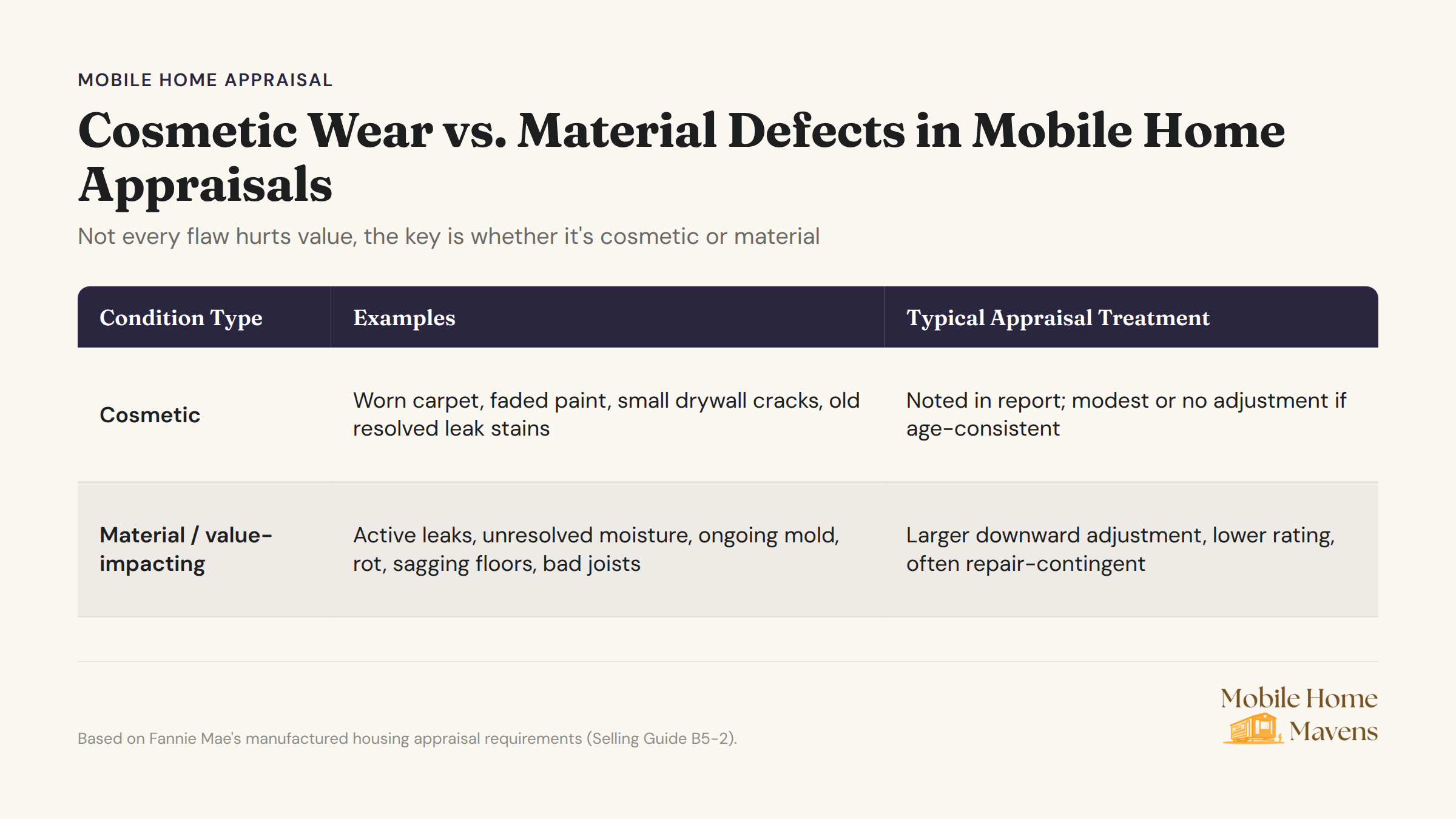
Not every stain or crack changes the appraised value. The distinction that matters is whether the condition is cosmetic (something to note but not fix) or material (something that affects safety, soundness, or structural integrity). Fannie Mae's underwriting guidance for manufactured housing directs appraisers to separate items needing immediate repair from ordinary deferred maintenance, and to specifically discuss how dampness or abnormal settlement affects value and marketability, as outlined in Fannie Mae's manufactured housing appraisal requirements.
Older manufactured homes are more prone to floor-system deterioration and moisture-related wear than site-built houses, largely because of their construction methods and how they sit off the ground. That makes the cosmetic-versus-material distinction especially important in this asset class:
| Condition Type | Examples in Mobile Homes | Typical Appraisal Treatment |
|---|---|---|
| Cosmetic | Worn carpet, faded paint, small non-structural drywall cracks, minor surface staining from a long-resolved leak | Noted in the report; modest adjustment or none, especially if consistent with the home's age |
| Material / value-impacting | Active roof or plumbing leaks, unresolved moisture source, visible mold tied to ongoing water intrusion, rot, soft or sagging floors, deteriorated floor joists or supports | Larger downward adjustment, lower condition rating, often a repair-contingent or "subject to" appraisal |
A lower condition rating affects more than the appraiser's narrative. It shifts which comparable sales are usable and how much adjustment those comparables need, which is covered in more detail in our guide to how mobile home depreciation works.
How Appraisers Calculate the Adjustment
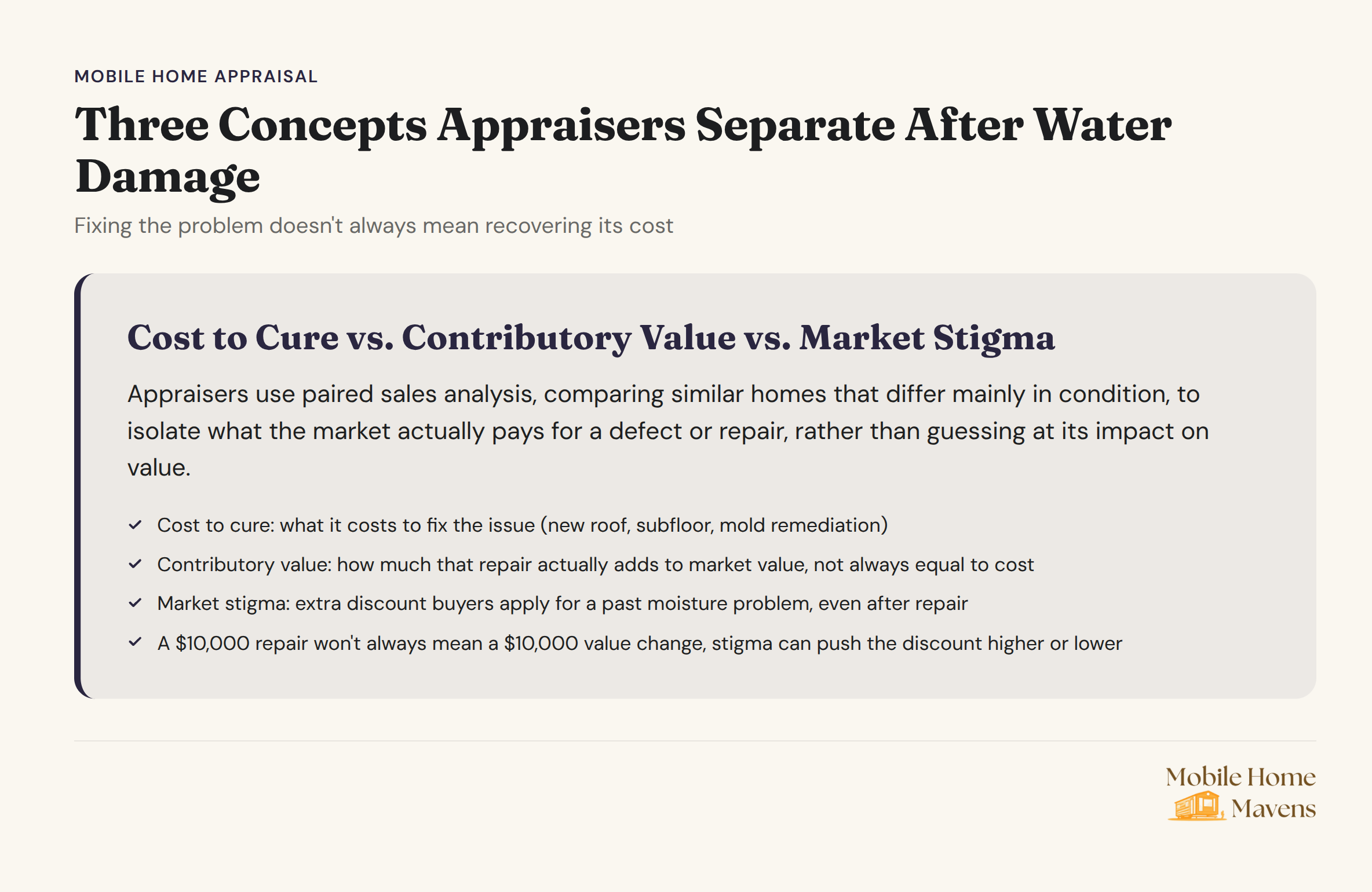
When the data supports it, appraisers use paired sales analysis to isolate the dollar or percentage effect of a condition difference. This means comparing two similar recent sales that differ mainly in condition, one with a defect like a repaired leak or replaced flooring and one without, to see what the market actually paid for the difference. When enough comparable manufactured home sales exist in a given market, this produces a defensible, market-supported adjustment rather than a guess.
Appraisers also separate three concepts that often get blurred together:
- Cost to cure: what it would cost to fix the problem (a new roof section, subfloor replacement, mold remediation).
- Contributory value: how much that repair actually adds to the home's market value, which is not always equal to its cost.
- Market stigma: an additional discount buyers apply simply because the home once had a moisture problem, even after it is fixed.
A $10,000 roof and subfloor repair will not automatically translate into a $10,000 value swing. If buyers in that market are wary of any home with a documented history of water intrusion, the discount can exceed the repair cost. If the repair is well documented and the local market treats it as routine, the discount may be smaller than the invoice.
Warning Signs Appraisers Look for During a Mobile Home Inspection
Appraisers rely on observable evidence, not lab results, to flag a moisture problem. Common warning signs in manufactured and mobile homes include:
- Persistent musty odors, especially near flooring, closets, or the belly wrap
- Discoloration or staining on ceilings, walls, or around windows
- Swelling, bubbling, or soft spots in flooring or wall finishes
- Condensation buildup on windows or in crawl spaces
- Standing water or visible dampness underneath the home
None of these signs come with a fixed dollar penalty attached. They tell the appraiser where to look more closely and whether the condition warrants a repair-contingent appraisal rather than a standard as-is report. Federal manufactured housing guidance treats efflorescence, mold, and staining as signals of a past or ongoing water problem serious enough to document, even when the appraiser cannot say exactly how it happened.
Why an Appraisal Isn't a Mold Test
An appraiser documents visible evidence of mold and moisture; an appraiser does not test air quality, identify mold species, or certify a home as remediated. There is no accepted numeric threshold for how much mold is "acceptable," which is precisely why appraisers work from observable evidence (visible growth, odor, moisture history, water intrusion) instead of a lab count. If a report flags a suspected mold condition, resolving the question of scope and health impact requires a qualified environmental or mold inspection professional, separate from the appraisal itself.
Watch out: A clean-looking repair does not always satisfy a lender. Federal guidance directs appraisers to condition a report on repair or further inspection when a physical deficiency could affect livability, soundness, or structural integrity, per HUD's appraisal policy on property conditions. That can mean the loan will not close until a qualified contractor or inspector signs off, not just the homeowner.
What This Means if You're Buying, Selling, or Refinancing
If you are selling a mobile home with a history of water damage, get the repair done and documented before the appraisal, not after. Appraisers and lenders give far more weight to a completed, verifiable repair than to a verbal assurance that "it's fixed now." Guidance for VA-backed loans is explicit on this point: the value conclusion should reflect the contributory value of completed repairs, not just an assumption that the pre-repair condition no longer matters, as described in VA's minimum property requirement guidance.
If you are buying, ask for documentation of any past leak, mold remediation, or foundation work, and expect the appraiser to note it even if repairs look complete. Filing an insurance claim for storm or plumbing-related water damage often runs alongside this process, and a separate mobile home appraisal for insurance coverage can help establish a defensible pre-loss value if a dispute over the claim arises later.
If you are refinancing, budget extra time when a home has visible moisture history. A repair-contingent appraisal adds a step (the lender needs to verify the fix before the loan can close), but it also protects everyone involved by keeping the concluded value tied to the home's actual, current condition.
Key takeaway: Mold and water damage move a mobile home's appraised value in proportion to how much they threaten the home's structure and marketability, not in proportion to how alarming they look. A documented, resolved leak with no structural damage might cost little in value. An active, unexplained moisture problem can take a home out of standard financing altogether until it's addressed.
This article is provided for general informational purposes only and does not constitute legal, tax, or financial advice. Readers should consult a qualified attorney, CPA, or licensed contractor regarding their specific circumstances.